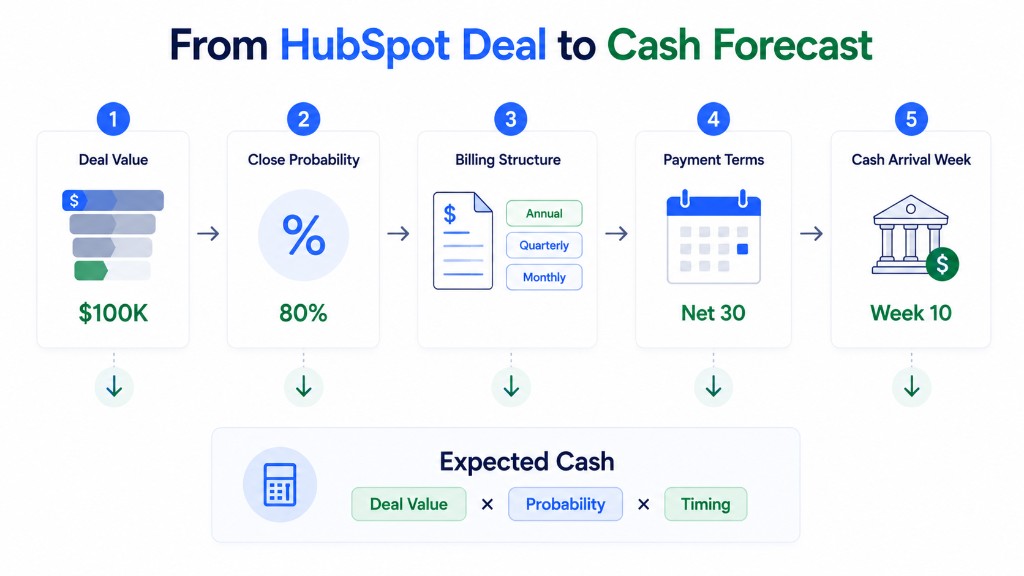
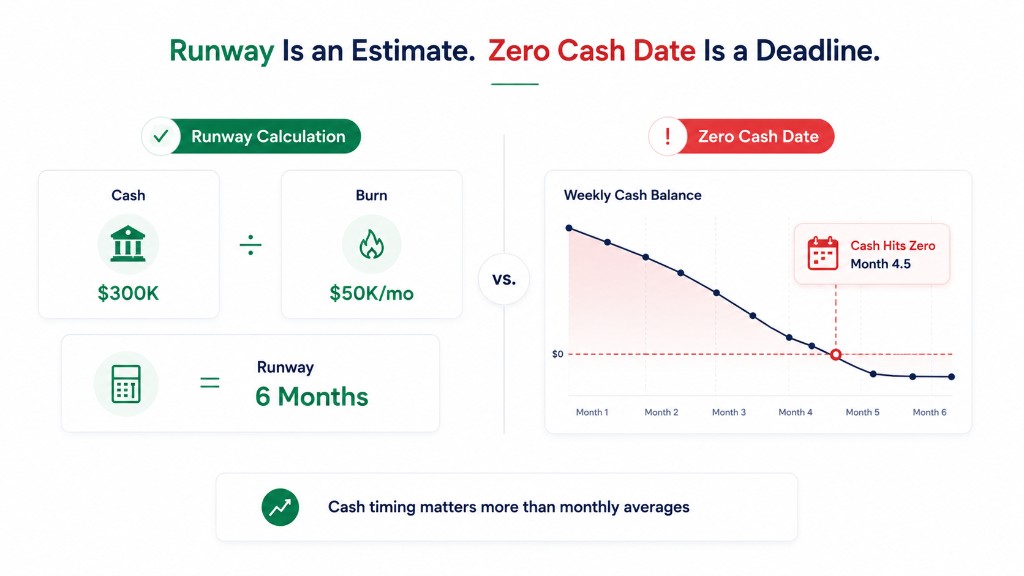
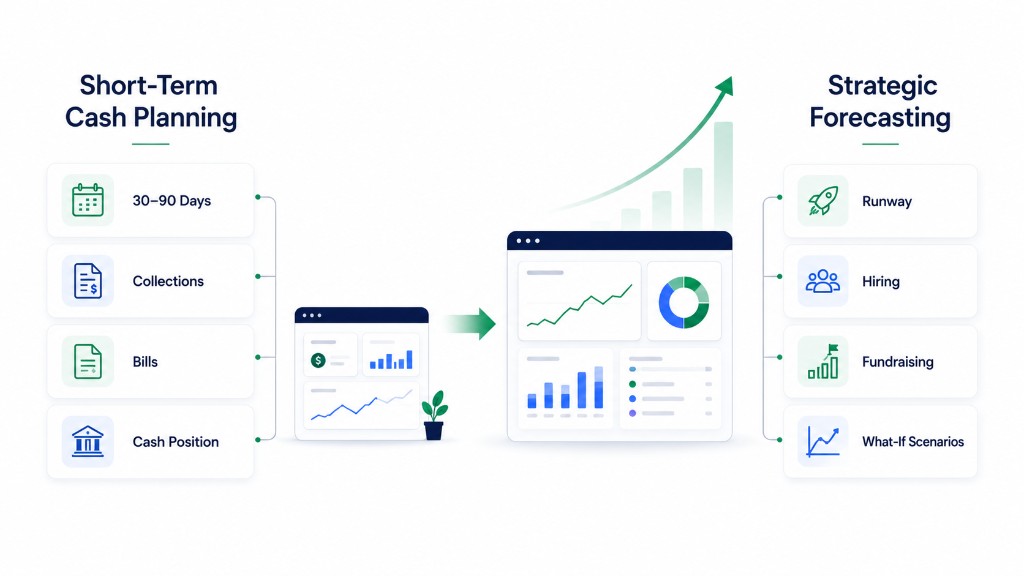
Cash flow forecasting is one of the most important financial processes for modern businesses.
It helps companies predict how much cash will move in and out of the business over a future period. With better visibility into future cash positions, finance teams can make smarter operational decisions, reduce financial risk, and improve overall liquidity management.
As businesses grow, managing cash flow becomes increasingly important for both founders and finance teams. Accurate forecasting helps organizations improve visibility, plan ahead, and make more confident financial decisions.
In this guide, we'll cover:
- what cash flow forecasting is
- why it matters
- common forecasting methods
- major forecasting challenges
- how modern finance teams improve forecast accuracy
What Is Cash Flow Forecasting?
Cash flow forecasting is the process of estimating future cash inflows and outflows over a specific period of time.
A cash flow forecast helps businesses understand:
- how much cash will be available
- when expenses are due
- whether liquidity levels are healthy
- how future financial obligations can be managed
Forecasting gives finance leaders the visibility needed to make informed business decisions and maintain operational stability.
Typical forecast inputs include:
- customer payments
- payroll expenses
- vendor payments
- taxes
- debt repayments
- operational expenses
- capital expenditures
The primary objective is to predict future cash movement as accurately as possible.
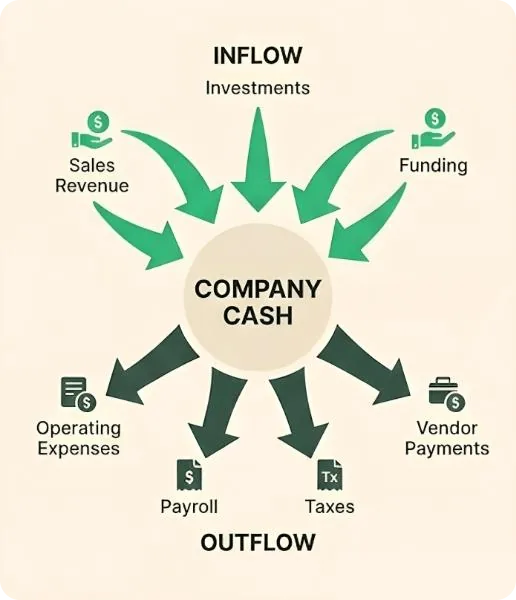
Cash flow forecasting also helps businesses maintain healthy working capital and liquidity positions. For readers unfamiliar with the broader concept of cash flow, Investopedia's explanation of cash flow provides a useful overview.
Why Cash Flow Forecasting Matters
Strong revenue growth does not always guarantee healthy cash flow.
Many businesses still face operational challenges because of:
- delayed receivables
- rising expenses
- poor liquidity visibility
- inaccurate forecasting assumptions
Cash forecasting helps businesses proactively identify these risks before they become major financial issues. For founders, cash flow forecasting also provides visibility into runway and burn rate, hiring capacity, and operational spending decisions.
Better Financial Visibility
Cash flow forecasting gives finance teams greater visibility into:
- current liquidity
- upcoming obligations
- operational cash requirements
- short term financial risk
This improves confidence in strategic planning and day to day decision making.
Improved Liquidity Management
Liquidity forecasting helps businesses ensure they have sufficient cash available to maintain operations smoothly.
This becomes especially important during:
- periods of economic uncertainty
- rapid business growth
- seasonal fluctuations
- expansion initiatives
Finance and treasury professionals increasingly view liquidity visibility as a critical operational capability. Organizations like the Association for Financial Professionals (AFP) regularly emphasize the importance of treasury modernization and forecasting accuracy in financial operations.
Smarter Business Planning
Accurate forecasting supports better decisions across the organization, including:
- hiring plans
- budgeting
- operational investments
- expansion planning
- debt management
Without reliable forecasting, businesses often operate reactively instead of proactively.
Reduced Financial Risk
Poor cash visibility can lead to:
- missed payroll cycles
- delayed supplier payments
- emergency borrowing
- unexpected liquidity shortages
Forecasting helps identify potential problems early enough for businesses to respond effectively.
How Cash Flow Forecasting Works
At a high level, cash forecasting combines historical financial data with future business expectations.
Finance teams estimate:
- expected incoming cash
- expected outgoing cash
- timing of future transactions
Forecasts are then updated regularly as new financial data becomes available.
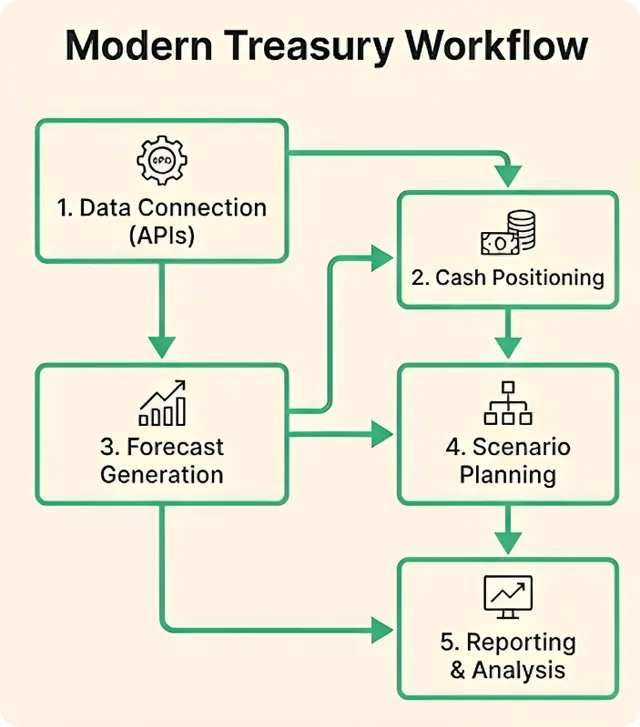
Zensus follows this loop in practice: connect bank, accounting, and subscription data once, then let webhook-driven sync refresh your cash flow forecast as transactions and contracts change, so the forecast you review is built on what already cleared, not a static export from last month.
Common Forecasting Time Horizons
Short Term Forecasting
Short term forecasts usually cover:
- daily forecasting
- weekly forecasting
- monthly forecasting
These forecasts are primarily used for operational liquidity management and treasury activities.
Medium Term Forecasting
Medium term forecasts often cover:
- quarterly forecasts
- six month forecasts
- annual planning periods
These are commonly used for budgeting and operational planning.
Long Term Forecasting
Long term forecasts may extend multiple years into the future.
These forecasts support:
- strategic planning
- fundraising
- expansion initiatives
- investment decisions
Types of Cash Flow Forecasting
Different forecasting methods serve different business objectives.
Direct Cash Flow Forecasting
The direct method forecasts actual expected cash receipts and payments.
This includes:
- customer collections
- payroll expenses
- supplier payments
- rent and operational expenses
Direct forecasting provides detailed short term visibility and is commonly used for treasury operations and liquidity management.
Indirect Cash Flow Forecasting
The indirect method starts with projected financial statements and adjusts for:
- depreciation
- working capital changes
- non cash expenses
This method is often used for:
FP&A processes
- strategic planning
- long term financial forecasting
What Is a Rolling Cash Flow Forecast?
A rolling cash flow forecast continuously updates as time progresses.
Instead of creating a fixed annual forecast, businesses continuously extend the forecasting window.
For example:
- a 13 week cash flow forecast may update weekly
- once one week is completed, another week is added
For a full walkthrough of the 13-week model (payroll lines, SaaS billing timing, and 2026 runway benchmarks), see What Is a 13-Week Cash Flow Forecast?
This allows finance teams to maintain continuous visibility into future liquidity. For example, a startup planning new hires may use a rolling forecast to determine whether projected cash reserves can support additional operational expenses over the next quarter.
Rolling forecasts have become increasingly popular because they improve:
- forecast accuracy
- business agility
- responsiveness to changing conditions
Common Challenges in Cash Flow Forecasting
Although forecasting is essential, many businesses still struggle with forecast reliability and operational complexity.
Spreadsheet Dependency
Many finance teams still rely heavily on spreadsheets for forecasting.
While spreadsheets offer flexibility, they also create challenges such as:
- manual errors
- fragmented workflows
- version control issues
- limited scalability
As businesses grow, spreadsheet-based forecasting often becomes difficult to maintain.
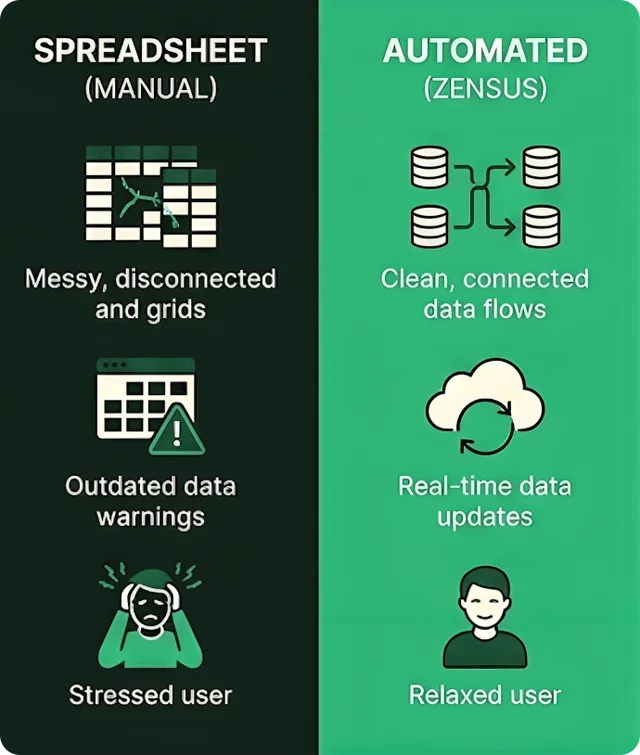
Zensus is designed around that handoff: instead of rebuilding tabs each week, founders connect live sources and work from a single cash flow view on the product features page, with drill-down, scenarios, and alerts replacing manual roll-forwards.
Fragmented Financial Data
Cash forecasting usually requires information from multiple systems, including:
ERP platforms
- accounting software
- banking systems
- payment tools
- operational platforms
Disconnected systems make real time visibility significantly harder to achieve.
Zensus addresses fragmentation by centralizing Plaid bank data, QuickBooks accounting, and HubSpot subscription timing in one forecast. QuickBooks Cash Flow Planner covers short-term operational liquidity inside QuickBooks itself; for what that tool does and does not do, see Can QuickBooks Forecast Cash Flow? See the integrations hub for how each source feeds the model, and how it works for the connect-to-forecast flow.
Poor Forecast Accuracy
Forecast quality often suffers when:
- assumptions become outdated
- financial data is delayed
- teams rely on manual processes
- inputs are inconsistent
Improving forecast accuracy is one of the biggest priorities for modern finance organizations.
Limited Real Time Visibility
Traditional forecasting workflows are often slow and reactive.
By the time reports are generated, financial conditions may already have changed.
Modern finance teams increasingly require:
- live cash visibility
- automated reporting
- centralized financial data
- real time forecasting updates
On Zensus, that visibility is operational: when data is more than an hour stale, the cash flow forecast recalculates automatically, and you can drill from monthly to weekly to daily cash flow without exporting to a spreadsheet.
How Technology Is Changing Cash Forecasting
Modern treasury teams are moving toward automated forecasting solutions that reduce manual work and improve financial visibility.
Instead of manually updating spreadsheets, businesses increasingly use platforms that:
- integrate financial systems
- centralize operational data
- automate forecasting workflows
- improve reporting speed
- enhance forecast accuracy
AI and predictive analytics are also helping finance teams identify patterns and improve forecasting performance over time.
For founders weighing AI tools that reach into the finance stack, the choice between the Model Context Protocol (MCP) and command-line access is increasingly a compliance question, not just a performance one.
This shift is accelerating the adoption of:
- treasury automation
- predictive forecasting
- real time liquidity management
- integrated finance operations
How Zensus Approaches Cash Flow Forecasting
Zensus is built for founders and finance teams who need a forecast that stays current, not a model you rebuild every time assumptions change. The product on zensus.app maps directly to the workflow this guide describes.
In practice, Zensus focuses on four capabilities:
Connect financial data in minutes: OAuth to Plaid, QuickBooks, and HubSpot so bank, accounting, and subscription revenue live in one place. How it works.
Subscription-aware cash flow: Project when annual and quarterly contracts actually hit the bank, then drill from monthly to weekly to daily cash flow in a few clicks.
Scenario planning in plain English: Stack hiring, churn, or payment-timing assumptions and watch your cash flow update live. Run scenarios with your cash flow agent.
Alerts before cash runs out: Set a cash floor on your 30-day projection and get Slack alerts when you breach it, with re-alerts on material changes.
Together, these replace the manual loop of exporting balances, rebuilding spreadsheets, and emailing static reports, while keeping the finance team in control of assumptions and thresholds.
Best Practices for Better Cash Flow Forecasting
Businesses that build strong forecasting processes typically follow several key best practices.
Use Rolling Forecasts
Rolling forecasts provide continuous financial visibility instead of static snapshots.
This helps organizations adapt faster to changing business conditions.
Update Forecasts Frequently
Forecasts should be reviewed and updated regularly.
Many finance teams update forecasts:
- weekly
- daily
- in real time
Frequent updates improve reliability and responsiveness.
Centralize Financial Data
Centralized financial data improves consistency and operational visibility.
It also reduces manual reconciliation work across teams and systems.
Zensus centralizes that data layer: one cash flow forecast fed by connected integrations, so treasury and ops are not reconciling three exports before they can answer a liquidity question.
Measure Forecast Accuracy
Finance teams should regularly monitor:
- forecast variance
- payment timing accuracy
- receivables accuracy
- liquidity performance
Continuous measurement helps improve future forecasting quality.
Reduce Manual Processes
Automation helps businesses:
- reduce spreadsheet errors
- improve collaboration
- speed up reporting
- eliminate repetitive tasks
Zensus automates the repetitive parts (sync, categorization, and projection updates) so teams spend time on assumptions and decisions. Explore drill-down, scenarios, and alerts on the features page.
The Future of Cash Flow Forecasting
Cash forecasting is evolving rapidly as businesses modernize finance operations.
Organizations are increasingly moving beyond static spreadsheets toward:
- real time forecasting
- automated treasury workflows
- AI powered analytics
- integrated financial visibility
As finance teams become more data driven, forecasting accuracy and operational agility will continue to grow in importance.
Businesses that improve cash visibility and forecasting capabilities will be better positioned to:
- manage uncertainty
- optimize working capital
- scale operations efficiently
- make faster strategic decisions
Final Thoughts
Cash flow forecasting has become a critical capability for modern finance organizations.
It helps businesses improve liquidity visibility, reduce operational risk, and make more informed financial decisions.
As forecasting complexity increases, finance teams increasingly need systems and workflows that support:
- automation
- centralized data
- real time reporting
- scalable forecasting operations
Organizations that invest in better forecasting processes today will be significantly better prepared for future growth and financial uncertainty.