Realizing you might not make payroll is one of the worst moments in a founder's journey.
Not legal advice: This article is for informational purposes only. Employment laws vary by state and country. Consult qualified legal counsel regarding your specific situation.
Maybe a large customer payment slipped. Maybe a funding round is delayed. Maybe revenue missed forecast. Whatever the cause, the result is the same: Friday's payroll run is approaching, and you are not sure the money will be there.
When founders search what happens if you miss payroll or what happens if a company misses payroll, most results are written for employees or HR teams. This guide is written for founders navigating a payroll emergency, a payroll funding shortage, or a payroll cash crunch.
We will cover:
- what happens if you miss payroll
- missed payroll consequences and payroll legal consequences
- employee payroll issues and trust implications
- what to do if you cannot make payroll
- a practical 7-day payroll emergency plan
- how to avoid missing payroll in the future
Missing payroll is not just a payroll cash flow problem. It can quickly become a legal, operational, and reputational problem.
What Happens If a Company Misses Payroll?
The short answer: a company missed payroll event can trigger wage law violations, payroll penalties, missed payroll taxes exposure, employee resignations, investor concerns, and long-term trust damage.
The severity depends on:
- your jurisdiction
- how late payroll is
- whether payroll taxes are also affected
- how you communicate with employees
The earlier you act, the more options you preserve. The worst outcome is discovering payroll will not clear on payday morning.
Is It Illegal to Miss Payroll?
In most jurisdictions, employers are required to pay employees according to established pay schedules. Federal and state wage laws generally require timely payment of wages earned.
Missing payroll can create wage-payment violations depending on state law, employee classification, payroll frequency, and length of delay. Founders should assume payroll deadlines are obligations, not suggestions.
Many first-time founders treat payroll like another vendor payment. It is not. Employees have already performed the work. Payroll is a legal obligation and a core payroll compliance requirement.
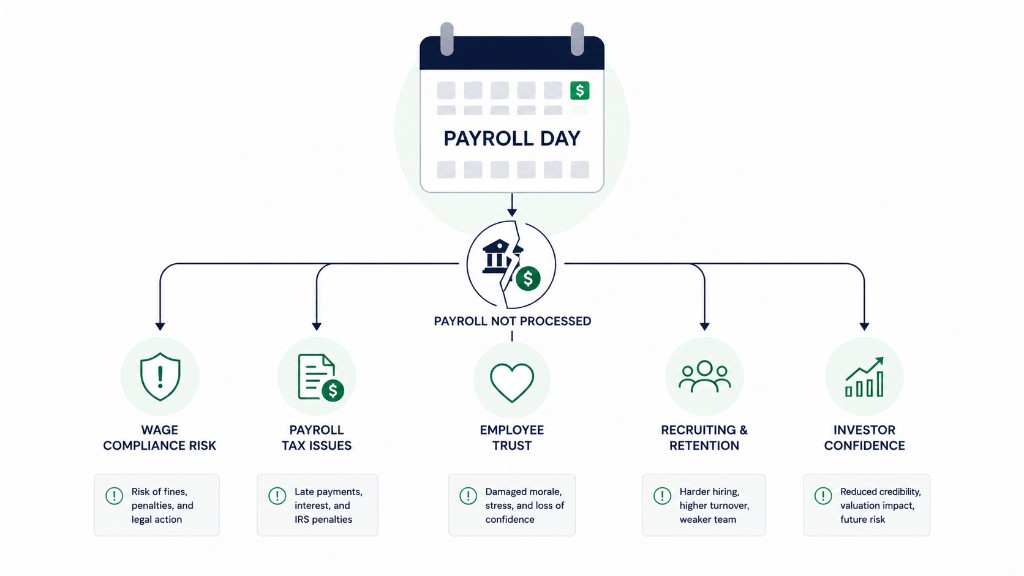
What Are the Consequences of Missing Payroll?
1. State Wage Penalties
Many states impose payroll late payment penalties when wages are not paid on time. Potential consequences include daily penalties, waiting-time penalties, wage claims, and labor agency investigations.
The longer payroll remains unpaid, the more exposure increases in most jurisdictions.
2. Payroll Tax Problems
A startup missed payroll event often creates a second problem: missed payroll taxes and payroll deposit penalties.
Employers remain responsible for:
- federal withholding
- Social Security taxes
- Medicare taxes
- state payroll taxes
Late deposits can trigger separate penalties and interest. A payroll funding emergency can become a tax compliance emergency quickly.
3. Employee Trust Damage
Legal exposure is rarely the first thing that hurts a startup. Trust is.
Employees often understand delayed revenue or a slow fundraise. What they struggle to accept is silence. An employer missed payroll situation without communication can cause more damage than the delay itself.
When payroll fails unexpectedly, employees ask:
- is the company running out of money?
- should I look for another job?
- will this happen again?
- can leadership be trusted?
4. Recruiting and Retention Problems
Payroll failures can create lasting reputational damage. Top performers have options. Once confidence in financial stability drops, retention risk increases and recruiting becomes harder.
5. Investor Confidence Issues
Investors understand startups face cash volatility. What concerns them is poor visibility. A payroll failure usually signals either insufficient cash or insufficient forecasting discipline. Many investors frame this as a forecasting failure, not just a funding failure.
Why Payroll Problems Usually Start Weeks Earlier
Most founders think payroll crises happen on payday. In reality, a startup payroll crisis usually begins weeks earlier.
Common warning signs:
- declining cash balance
- delayed receivables
- increasing burn rate
- rising payroll obligations
- unplanned hiring
- customer concentration risk
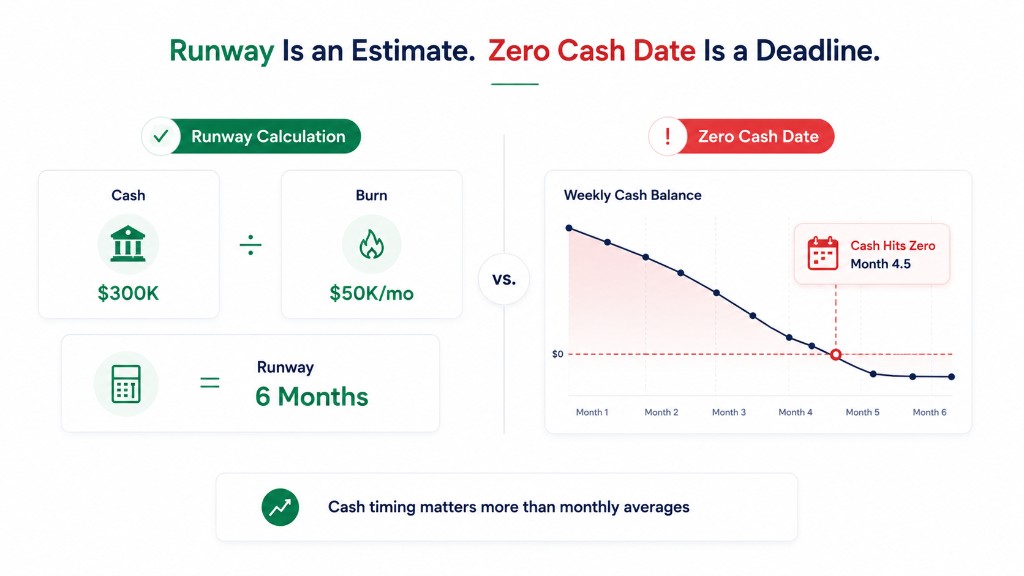
The payroll failure is usually the final symptom. The underlying payroll liquidity management problem appeared earlier. This is why weekly rolling forecasts matter.
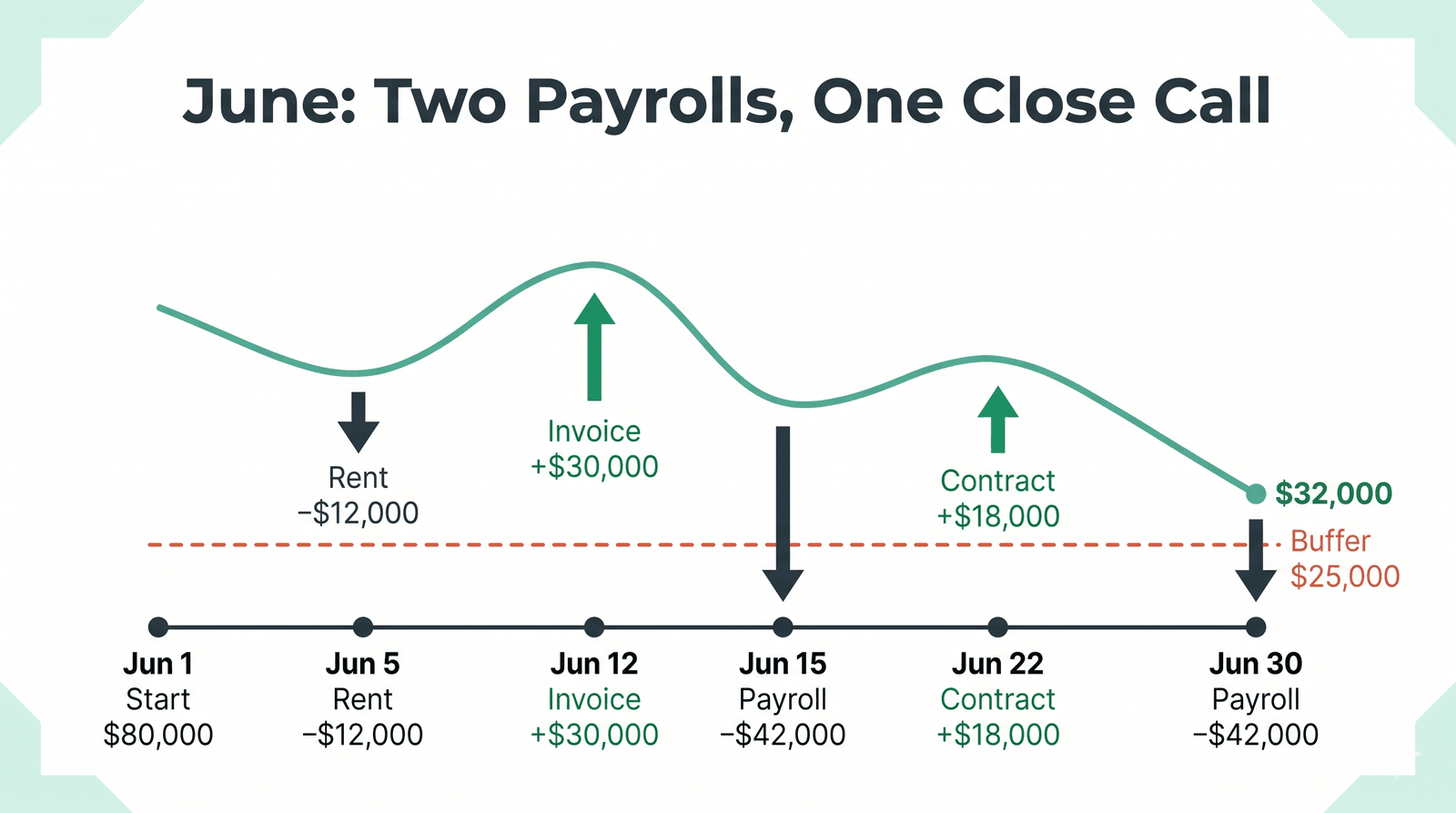
A founder should know will I make payroll weeks before payday, not the day before. Use the free payroll calendar calculator to map pay dates and three-paycheck months, then layer a date-aware forecast.
What Should I Do If I Cannot Make Payroll?
If you are asking what to do if you cannot make payroll, time matters. The goal is preserving options, not perfection.
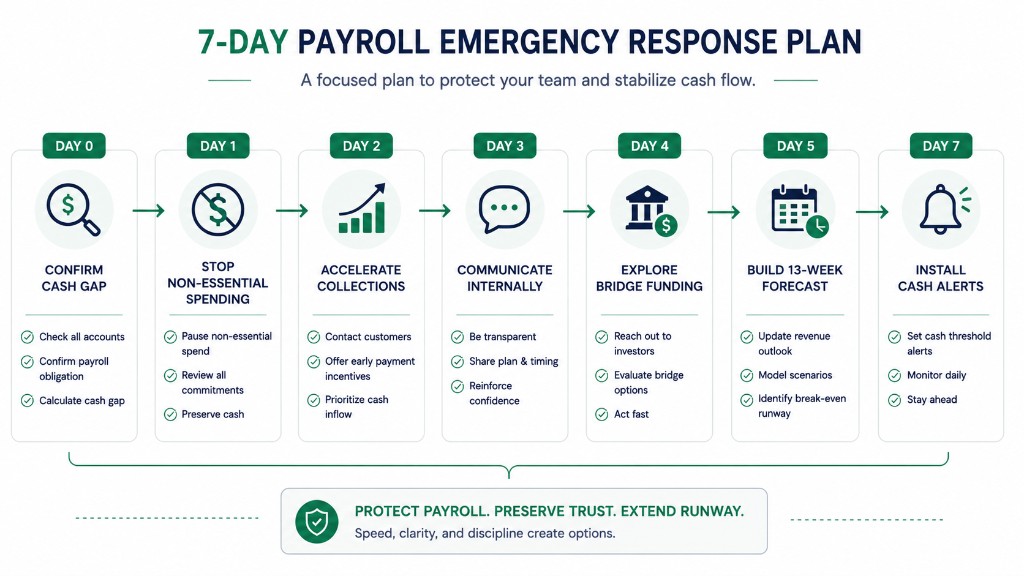
Day 0: Confirm Reality
Before taking action, determine the exact payroll shortfall. Calculate current cash balance, payroll due, expected deposits, outstanding receivables, and available credit facilities.
Avoid optimism. Use actual numbers. Assumptions are dangerous in a payroll emergency.
Key question:
How much money are we actually short?
Day 1: Stop Non-Essential Spending
Immediately review outgoing cash and pause discretionary spend. Payroll obligations come first.
Look for:
- marketing spend
- contractor payments
- software renewals
- discretionary purchases
- travel expenses
Day 2: Accelerate Collections
The fastest source of cash is often money already owed to you. Focus on outstanding invoices, late payments, pending renewals, and enterprise signatures.
Many founders are surprised how much cash can be unlocked through direct outreach. A call can move faster than external financing.
Day 3: Communicate Internally
Founders often ask: should I tell employees before payroll fails? In most cases, yes. Earlier communication is better than surprise.
Communication should be:
- honest
- direct
- specific
- action-oriented
Avoid promises you cannot guarantee. Focus on facts and next steps.
Day 4: Explore Bridge Financing
If the shortfall remains, evaluate bridge rounds, SAFE extensions, venture debt, and available credit facilities. The goal is making payroll, not maximizing valuation.
Investors are often more willing to support a temporary payroll gap than an actual payroll failure.
Day 5: Build a 13-Week Cash Plan
Once immediate risk is contained, zoom out. Most payroll emergencies are payroll cash flow forecasting failures.
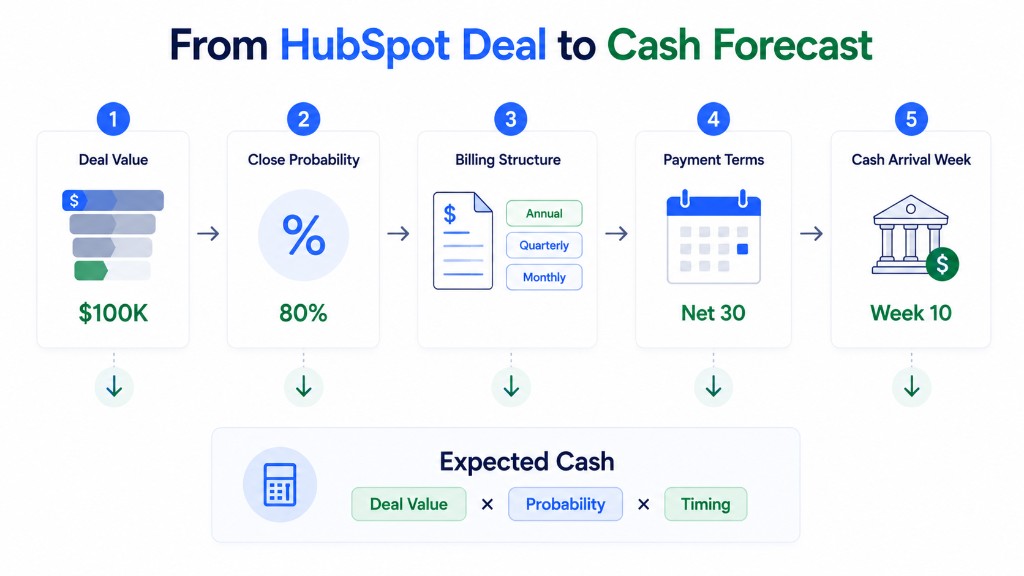
Create a rolling plan that includes payroll obligations, revenue expectations, debt payments, vendor obligations, and expected cash receipts. A 13-week cash flow forecast usually reveals risk early enough to prevent repeat incidents.
Day 6: Establish a Payroll Cash Floor
Define a minimum cash reserve dedicated to payroll, a payroll safety buffer. Payroll should not depend entirely on next week's customer payment.
Day 7: Install Early-Warning Systems
The best payroll emergency is the one that never happens. Founders should know payroll due dates, upcoming cash shortages, burn rate changes, runway impacts, and collection delays weeks before payroll is affected.
Automated forecasting helps. Instead of manually checking spreadsheets, teams can receive alerts when projected balances approach a critical cash floor.
How to Avoid Missing Payroll in the Future
Most payroll crises are preventable.
The strongest defenses are:
Maintain a Payroll Reserve
Separate payroll obligations from general operating cash.
Forecast Weekly
Monthly review cycles are too slow for payroll risk.
Monitor Burn Rate
Unexpected burn increases create payroll pressure quickly.
Track Collections Aggressively
Revenue timing matters as much as revenue amount.
Use Scenario Planning
Model best case, base case, and worst case before problems emerge. Run these on the Zensus scenarios feature to see impact immediately.
How Zensus Helps Founders Avoid Payroll Emergencies
Payroll failures usually develop gradually. The challenge is seeing them early enough.
Zensus helps founders answer:
- will we make payroll next month?
- what happens if a major customer pays late?
- how much runway remains?
- what if hiring accelerates?
- which scenario creates payroll risk?
Zensus combines bank data via Plaid, accounting data via QuickBooks, and revenue data via HubSpot into one forecast model. Teams use drill-down views, scenario modeling, and Slack alerts to monitor payroll risk continuously.
Map pay-cycle risk with the payroll calendar tool and monitor runway with the runway calculator. Plans are on the pricing page.
Final Thoughts
What happens if a company misses payroll? The consequences extend far beyond late payment. Missed payroll consequences include legal exposure, payroll penalties, tax risk, employee trust damage, recruiting friction, and investor concern.
The good news is that most payroll crises are visible before they happen. Founders who monitor cash flow, forecast weekly, maintain payroll reserves, and act early keep more options than founders who wait until payday.
The best response to a payroll emergency is not a perfect recovery plan. It is making sure you never need one.